
Review · ANCIENT CITIES DAY TRIPS
Three Ancient Kingdoms Tour | from Colombo
The most appealing part of this tour is its focus on three lesser-known royal capitals rather than Sri Lanka’s best-known sights alone. From Colombo, you travel into the Northwestern Province to see palace ruins, an old Temple of the Tooth, a rock fortress, and an irrigation reservoir dating to ancient times.
I like the private vehicle and flexible chauffeur guide, since the long road day is easier when only your own group is involved. I also like the chance to compare Dambadeniya, Yapahuwa, and Panduwasnuwara, each shaped by a different period of Sri Lankan rule.
The catch is the schedule: 10 hours with several hours on the road, an early 6:00 am pickup, and some uphill walking at Yapahuwa. Entrance fees, breakfast, lunch, and other drinks are not included, so plan for those extra costs.
Key points at a glance
- Three medieval and ancient capitals: See Dambadeniya, Yapahuwa, and Panduwasnuwara in one long day from Colombo.
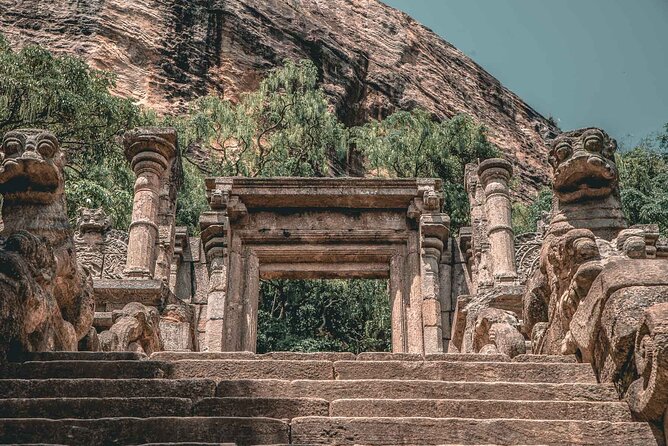
- Yapahuwa’s carved staircase: Climb toward a rock citadel known for detailed stone work unlike Sigiriya’s.
- Dambadeniya’s royal remains: Visit palace grounds, gardens, walls, moats, and the former Temple of the Tooth site.
- Panduwasnuwara’s long timeline: Find ruins linked to both the fifth century BC and the twelfth century.
- Private transport from Colombo: Ride in an air-conditioned vehicle with an English-speaking chauffeur guide.
- A demanding but useful schedule: Start early, bring a packed breakfast, carry water, and expect moderate physical activity.
Why this route is worth your day
Many day trips from Colombo aim for one famous attraction. This one takes a different path. You spend the day tracing changes in Sri Lanka’s royal power, religion, architecture, and water management across several old capitals.
That makes the experience especially useful if you have already seen the main sights, or if you want historical places with fewer layers of modern development around them. You are not simply ticking off three monuments. You are comparing how kings chose defensible sites, moved capitals, protected the Sacred Tooth Relic, and managed water.
The tour costs $85 per person, including hotel pickup and drop-off from Colombo, private transport, the chauffeur guide, and a one-liter bottle of water. That is fair value for a private 10-hour outing, though you must add entrance fees and food. The price makes more sense for two or more people sharing the vehicle than for one person paying alone.
The experience has a 4.9 rating from 18 ratings, with 100 percent recommending it. The strongest praise centers on the guide’s ability to explain the lesser-known sites, accommodate the group, and keep you informed before the outing. Those qualities matter here because the sites are spread out and the day depends on good timing.
More ancient cities day trips:
- Sigiriya, Polonnaruwa & Dambulla “Trilogy” Day Tour from Colombo
★ 4.5 · 26 reviews - Day Tour from Colombo to Sigiriya, Dambulla & Polonnaruwa
★ 4.5 · 21 reviews - Day Tour Anuradhapura from Kandy by Lux Tours Lanka
★ 4.5 · 5 reviews
6:00 am from Colombo: start before the heat
Pickup begins at 6:00 am from your Colombo hotel. The first drive to Dambadeniya takes about two hours, so I would bring a packed breakfast rather than count on finding a convenient meal during the early part of the route.
This early start is not just a scheduling detail. It gives you a better chance of reaching the outdoor ruins before the strongest midday heat. It also allows the tour to fit three separate historic areas into one day without making the return journey even later.
Transport is provided in an air-conditioned vehicle, and the tour is private, so your group does not share the day with other passengers. You can ask the chauffeur guide questions as you go, and the private setup should make stops less rigid than a large coach excursion.
Still, this is a road-heavy day. The journey between sites takes a large part of the schedule, and you should be comfortable sitting in a vehicle for extended periods. Wear practical shoes, carry sun protection, and keep the included water bottle close.
Dambadeniya: a royal capital among palace ruins
Dambadeniya is the first stop, reached after roughly two hours on the road. You spend about one hour here, and admission is listed as free.
The kingdom reached its height in the mid-thirteenth century, especially under King Parakramabahu II. His reign is linked with major developments in Sinhalese literature, including the poetic works Kavisilumina and Visuddi Marga Sannasa. That literary detail gives the site more depth than a simple collection of broken walls.
The main sights are the recently excavated remains of the old Temple of the Tooth and the ruins of the royal palace complex. You can see traces of gardens, walls, and moats, which help you picture how the royal center was arranged.
Dambadeniya is a good opening stop because it introduces the political and religious themes that appear again later. The Temple of the Tooth was not just a place of worship. Housing the relic gave a capital immense symbolic importance, and its movement helps explain why Sri Lankan kings repeatedly shifted their seats of power.
The limitation is time. One hour is enough for an overview, but not for a slow archaeological study. If you like reading every sign and examining each ruin closely, the pace may feel brisk. Your chauffeur guide’s explanations will be important, since the physical remains can be subtle.
Yapahuwa’s rock fortress and carved approach
The drive from Dambadeniya to Yapahuwa takes about an hour and a half, with arrival scheduled around 10:30 am. You have about two hours at the fortress, the longest visit of the day.
Yapahuwa was a capital after Dambadeniya, chosen during a period of invasion from South India. The citadel sits on a huge granite rock that rises almost 100 meters above the surrounding lowlands. Its position gave the capital a strong defensive advantage and created the dramatic setting you expect from a rock fortress.
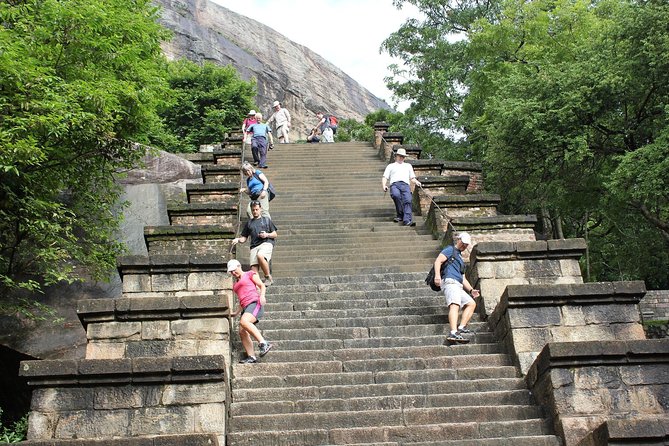
The comparison with Sigiriya is useful, but Yapahuwa should not be treated as a smaller copy. Its wide staircase, stone sculptures, and detailed pillar carvings give it a different character. The climb toward the fortress is the main feature, and the carved approach rewards you before you reach the upper ruins.
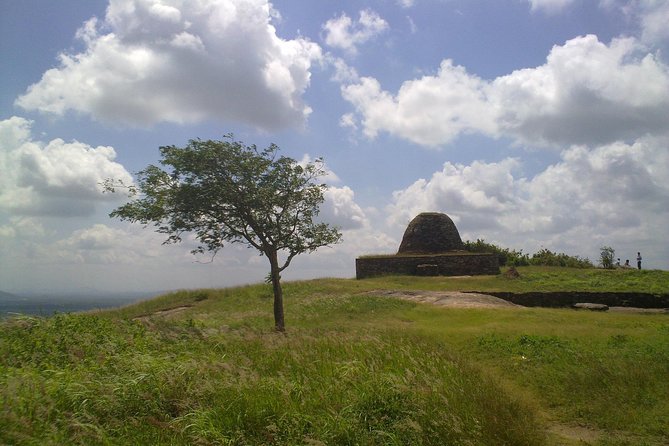
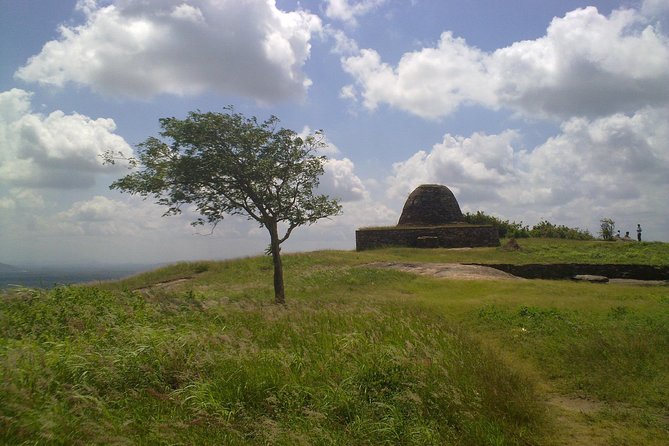
The site later became a monastery used by Buddhist monks. At the summit, you can view the remains of a stupa, including statues and imagery associated with the Kandyan era. The higher you climb, the more physical the visit becomes, so this is where the tour’s moderate fitness requirement matters most.
You should expect uneven ground and an uphill route. The tour data does not give a precise step count or accessibility details, so anyone with mobility concerns should ask the operator before booking. Comfortable footwear is more useful here than stylish footwear.
Yapahuwa also carries an important story about the Sacred Tooth Relic. In 1272, King Bhuvenakabahu moved the capital from Polonnaruwa to Yapahuwa and brought the relic with him. After his death in 1284, the Pandyans of South India invaded and captured it. Yapahuwa was then largely abandoned as a royal capital and later used by Buddhist monks and religious ascetics.
That short political life is part of what makes the site interesting. You see how quickly a fortified capital could lose its role when military pressure and control of the relic changed.
A few more Colombo trips to compare
- Colombo: Private Tuk-Tuk City Tour with All Entry Fees
★ 4.9 · 2,154 reviews - Sri Lanka Personal Tour Driver in private vehicle
★ 5.0 · 747 reviews - Colombo Tuk Tuk City Tour -Sightseeing Entry Fees & Food Included
★ 5.0 · 678 reviews - Udawalawe National Park: Elephant Safari with Expert Guide
★ 4.9 · 641 reviews
Panduwasnuwara: two thousand years of changing use
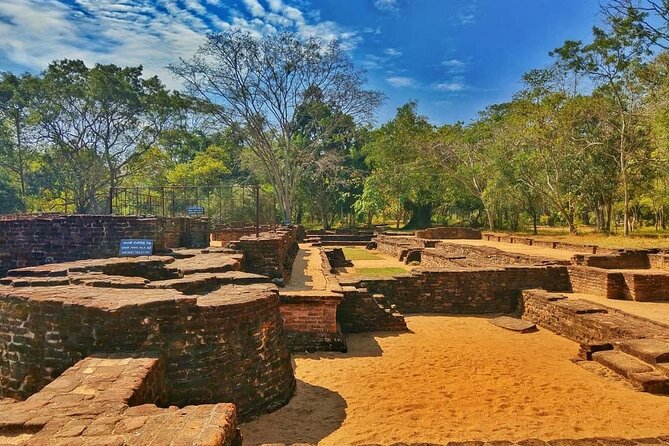
After Yapahuwa, the drive to Panduwasnuwara can take up to an hour and a half. You spend about one hour at the ancient city, where ruins spread across nearly 12 hectares.
Panduwasnuwara is unusual because the site reflects several periods rather than one brief royal chapter. It served as a capital in the fifth century BC, then saw renewed use in the twelfth century. That long span gives you a chance to see how the same place can be adapted by different rulers and religious communities.
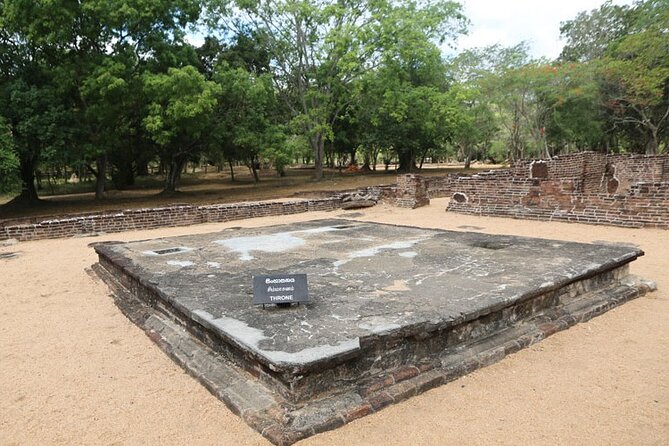
The most notable structure is the recently restored monument identified as a former two-storied Temple of the Tooth. You can also see remains of the royal palace and the artificial reservoir known as Panda Wewa.
Panda Wewa is especially valuable for understanding Sri Lanka beyond royal ceremonies and temples. The reservoir is considered one of the earliest irrigation systems made by humans. Its presence connects the city to the practical work of supporting agriculture, settlements, and political power.
You also visit the Panduwasnuwara museum. The supplied details do not specify its exact displays, so do not expect a particular collection or exhibition. Still, a museum visit can help you make sense of scattered foundations and restored structures before you leave.
One hour is again an introduction rather than a full archaeological study. The broad site area may require walking between separate ruins, and the heat can affect your pace. If you want a slow visit at every structure, a private custom itinerary with fewer stops may suit you better.
The second Yapahuwa entry: clarify the day’s order
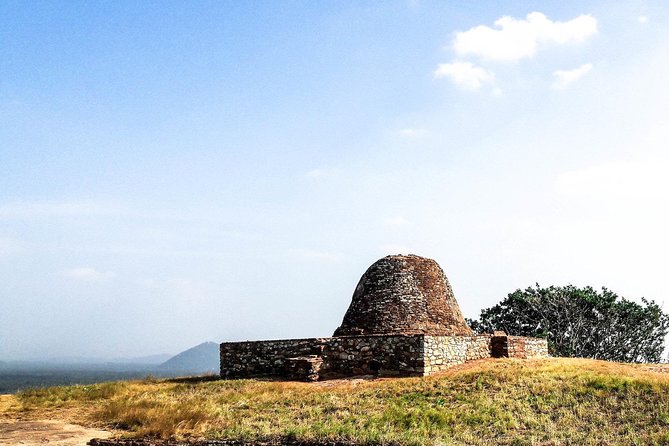
The planned route lists Yapahuwa twice. The first Yapahuwa stop is the two-hour visit to the rock fortress, while a later entry describes Yapahuwa Ancient Kingdom, including its granite citadel, royal history, and abandonment after the Sacred Tooth Relic was captured.
Because the supplied schedule does not clearly explain how these two entries differ, I would confirm the precise order and whether the final 30-minute Yapahuwa entry is a separate viewpoint, a second portion of the same site, or a duplicated description. This is the one point I would clarify before paying, especially since the overall day is already tightly timed.
The historical material attached to the second entry is still useful. It explains Yapahuwa’s position between Kurunegala and Anuradhapura and its role as an ephemeral medieval capital. The citadel was built around a massive granite rock, and after the royal court left, the area became associated with monks and religious ascetics.
If the final 30-minute stop is simply a shorter return to the same Yapahuwa complex, you may get a second look at details missed during the climb. If it is a separate nearby section, the guide can help connect the two parts. Ask for clarification so your expectations match the actual route.
What the $85 price really covers
At $85 per person, you are paying for more than admission to three historic places. The package includes:
- Hotel pickup and drop-off from Colombo hotels
- An air-conditioned vehicle
- An English-speaking chauffeur guide
- A one-liter bottle of water per person
- A private tour for your group
Food and drinks are not included, and entrance fees for the sites are also extra. The lack of a provided breakfast matters because pickup is early, so bring food with you. You should also budget for lunch and any admission charges required at Yapahuwa and Panduwasnuwara.
I see the best value here in the private transport and the route itself. Reaching three widely separated sites independently would require more planning, and the chauffeur guide gives you a single point of contact for navigation and interpretation.
The price is less attractive if your main goal is one famous monument or a relaxed day. You spend much of the 10-hour outing in transit, and the sights require walking. For history-minded visitors, the range is the point. For anyone seeking a slow, restful excursion, it may feel overpacked.
Who will enjoy this ancient kingdoms tour
I would choose this tour if you want political and religious history, enjoy archaeological ruins, and prefer smaller sites to the most heavily visited attractions. It also suits people who have only one free day from Colombo but want more than a single stop.
The private format works well for couples, families, or small groups with similar interests. Group discounts may improve the value when several people book together.
You should think twice if you dislike early starts, long drives, heat, or uphill walking. The tour requires a moderate level of physical fitness, and the itinerary leaves limited time for lingering.
The route is also better for people who enjoy context. Dambadeniya may look modest if you expect intact palaces. Yapahuwa rewards the climb and close attention to carvings. Panduwasnuwara asks you to use the museum, ruins, temple remains, and reservoir together to understand the site.
Practical advice for making the day work
Bring a packed breakfast for the first two-hour drive. Wear shoes suitable for uneven and uphill paths, and carry sun protection because several stops are outdoors.
Keep your schedule flexible. The listed duration is approximately 10 hours, but road conditions and time spent at each site can affect the return. Since the tour begins at 6:00 am, arrange your evening so you can start rested.
Ask about the duplicate Yapahuwa entries before departure. This is not a reason to reject the tour, but it is a sensible question that can prevent confusion during a full day.
The operator provides confirmation at booking, and free cancellation is available up to 24 hours before the start time. Changes or cancellations inside that window are not accepted, and poor weather can lead to a different date or a full refund. The tour is also described as being near public transportation, though hotel pickup remains the practical choice for this early start.
Should you book it?
Book this tour if you want a private, history-focused day from Colombo and are willing to trade comfort and leisure for a wide sweep of Sri Lankan royal sites. Dambadeniya gives you palace and relic history, Yapahuwa adds the strongest climb and stone carving, and Panduwasnuwara widens the story with ancient irrigation and ruins from several periods.
Skip it if you want a short outing, a famous headline attraction, or a day with little time in the car. Before booking, confirm the two Yapahuwa entries and add food and entrance fees to the $85 price. For the right kind of visitor, this is a worthwhile route into Sri Lanka’s older capitals, with a private guide making the scattered remains easier to understand.
FAQ
What time does the tour begin?
Pickup begins at 6:00 am from your Colombo hotel.
How long does the experience last?
The tour lasts approximately 10 hours.
Is hotel pickup included?
Yes. Hotel pickup and drop-off from Colombo hotels are included.
Is this a private tour?
Yes. Only your group participates.
Is transportation air-conditioned?
Yes. Transport is provided in an air-conditioned vehicle.
Are entrance fees included?
No. Entrance fees for the sites are not included in the tour price.
What should I bring for the early start?
Bring a packed breakfast, since the first drive to Dambadeniya takes about two hours. You should also wear suitable shoes because the tour includes walking and an uphill climb at Yapahuwa.
Recently added around Colombo
- Yala Safari All-Inclusive Package with Convenient Pick Up★ 4.4 · 3 reviews
- Wilpattu: Private Safari Day Trip with Lunch & Entry Fees★ 4.6 · 9 reviews
- Tuk Trip is Very Cheap in Colombo (All-inclusive ) city tour★ 3.4 · 5 reviews
- Tuk Tuk Tales of Colombo From Cruies★ 4.6 · 4 reviews
- Tuk Trip is Very Cheap in Colombo (All-inclusive ) city tour★ 4.5 · 5 reviews
- Colombo Shore Excursion from Cruise Port – Private Small Group★ 5.0 · 6 reviews
- White Water Rafting at Kitulgala★ 4.0 · 9 reviews
- Yala Full Day Safari with Picnic Lunch – Private & All Inclusive★ 5.0 · 8 reviews
Ancient Cities Day Trips, compared.
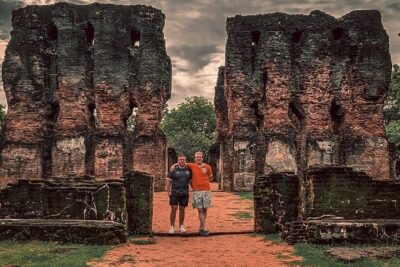
Sigiriya, Polonnaruwa & Dambulla “Trilogy” Day Tour from Colombo
Read our review →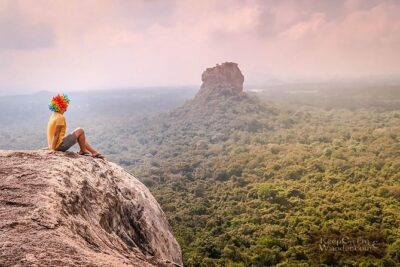
Day Tour from Colombo to Sigiriya, Dambulla & Polonnaruwa
Read our review →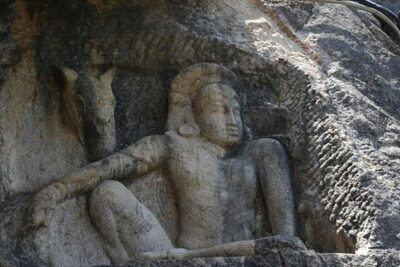
Day Tour Anuradhapura from Kandy by Lux Tours Lanka
Read our review →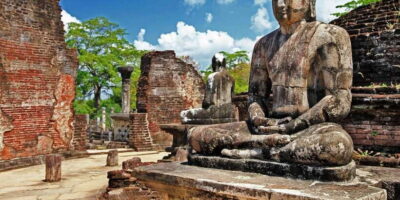
Day Trip to the Ancient Capital of Polonnaruwa From Colombo
Read our review →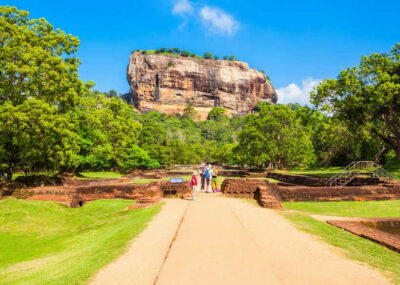
Browse the lists this tour appears in